One of the most common questions parents ask is, “When should my child get braces?” And one of the most common questions adults ask is, “Am I too old for braces?”
The short answers: most children benefit from treatment between ages 10 and 14, and adults can get braces at almost any age as long as their teeth and gums are healthy.
Here’s what you need to know about timing, and how to decide what’s right for you or your child.
When Should a Child First See an Orthodontist?
Orthodontic specialists recommend a first orthodontic check-up around age 7. This doesn’t mean your child will get braces at 7. Most won’t.
At this age, a child has a mix of baby and permanent teeth, and the jaw is still growing. An early evaluation helps the dentist spot problems such as:
- Crowding or not enough space for permanent teeth
- Crossbites, where upper teeth sit inside the lower teeth
- Severe overbite or underbite
- Jaw growth that is uneven or out of balance
- Habits like thumb-sucking or mouth breathing that affect tooth position
Some of these are easier to correct while the jaw is still developing. For most children, though, the dentist will simply monitor growth and recommend treatment later.
The Ideal Age for Braces: 10 to 14 Years
For most children, the best time for braces is between 10 and 14, after most baby teeth have fallen out and permanent teeth have come in.
This age range works well because:
- The jaw is still growing, so teeth move more easily and some bite problems can be guided with growth
- Most permanent teeth are in place, so the full bite can be corrected in one phase
- Treatment is often faster than it would be for an adult with the same problem
- Kids adapt quickly to braces, and many of their classmates are going through the same thing
Every child develops at a different pace, so the right timing depends on dental development, not just age.
What Is Early (Phase 1) Treatment?
Some children need treatment before all their permanent teeth have come in, usually between ages 7 and 10. This is called early or Phase 1 treatment.
It is used for problems that are harder to fix later, such as severe crossbites, very narrow upper jaws, or protruding front teeth that are at risk of injury. Treatment may involve expanders or partial braces.
Many children who have Phase 1 treatment still need a second phase of braces once their permanent teeth are in, but it’s usually shorter and simpler.
Can Adults Get Braces?
Yes. There is no upper age limit for braces. Teeth can be moved at any age as long as the gums and supporting bone are healthy.
More adults are choosing orthodontic treatment than ever, often for reasons such as:
- They never had braces as a child
- Their teeth shifted after childhood braces because they stopped wearing retainers
- Crowded teeth are hard to clean, causing decay or gum problems
- Bite problems are causing uneven wear, jaw discomfort, or difficulty chewing
- They want a more confident smile for work, a wedding, or personal reasons
- Teeth need to be aligned before implants, crowns, or bridges
How Adult Braces Are Different
Adult orthodontic treatment works the same way, but there are a few differences:
It can take a little longer. Adult bone is denser and the jaw has stopped growing, so teeth may move more slowly. Many adult cases take around 18 to 24 months, depending on complexity.
Gum health matters more. Before starting, your dentist will check for gum disease. If present, it needs to be treated first. Our scaling and cleaning services are often the first step.
Existing dental work is considered. Crowns, bridges, implants, or missing teeth may affect the treatment plan.
Discreet options are popular. Many adults prefer ceramic braces or clear aligners that are less noticeable.
Types of Braces: Which Is Right for You?
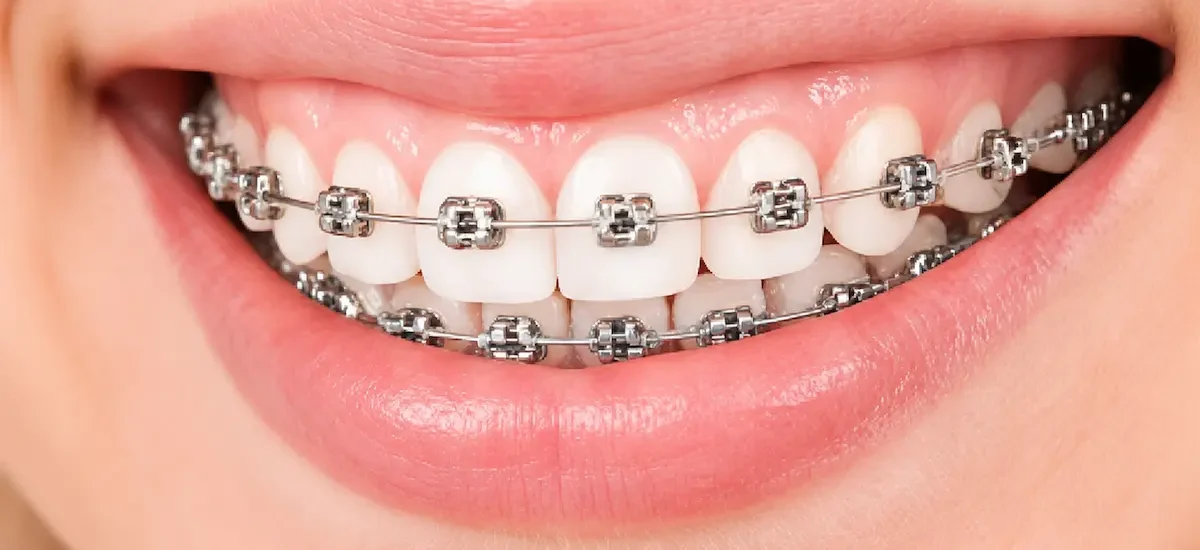
Metal braces
The most common and cost-effective option. Durable and effective for all types of cases, including complex ones. Suitable for children, teens, and adults.
Ceramic braces
Work the same way as metal braces, but use tooth-colored or clear brackets that blend in with your teeth. A popular choice for adults and older teens.
Clear aligners
Removable, nearly invisible trays that gradually move teeth. They’re easy to take out for eating and brushing, but they need to be worn around 20 to 22 hours a day to work. Best for mild to moderate cases and for patients who are disciplined about wearing them.
Your dentist will recommend the best option based on your bite, lifestyle, and budget. Learn more about our orthodontic treatment options.
Signs You or Your Child May Need Braces
- Crowded, overlapping, or crooked teeth
- Gaps between teeth
- Upper teeth that stick out far past the lower teeth
- Lower teeth that sit in front of the upper teeth
- Teeth that don’t meet properly when biting
- Difficulty chewing or biting
- Jaw clicking or discomfort
- Early or late loss of baby teeth
- Frequent biting of the cheek or roof of the mouth
Retainers: The Step Many People Skip
Once braces come off, teeth naturally try to move back to their old positions. Wearing your retainer as instructed is what keeps your results.
Many adults who come to us for braces had treatment as children but stopped wearing their retainers. Your dentist will explain how long and how often to wear yours.
Frequently Asked Questions
What is the best age for braces?
For most children, between 10 and 14 years, once most permanent teeth have come in. A first orthodontic check-up is recommended around age 7.
Am I too old for braces at 30, 40, or 50?
No. Adults of any age can get braces if their teeth and gums are healthy. The main factors are oral health, not age.
How long do braces take?
Treatment usually takes 12 to 24 months for children and teens, and often 18 to 24 months for adults. Complex cases can take longer.
Do braces hurt?
You may feel pressure or mild soreness for a few days after braces are placed and after each adjustment. This is normal and usually managed with soft foods and over-the-counter pain relief.
Can I get clear aligners instead of braces?
Clear aligners work well for many mild to moderate cases. Complex bite problems may be better treated with fixed braces. An exam will show which option suits your teeth.
Can I get braces if I have missing teeth or crowns?
Often, yes. Braces can even be used to create the right space before placing an implant or bridge. Your dentist will plan treatment around your existing dental work.
Braces and Clear Aligners in Kathmandu
At Bagmati Dental Clinic in Pepsicola, we offer metal braces, ceramic braces, and clear aligners for children, teens, and adults. Every treatment starts with a full examination and a personalized plan, with transparent pricing explained before you begin. For younger patients, our kids dentistry team makes early check-ups comfortable and stress-free.
Wondering if it’s time for braces? Book an orthodontic consultation for yourself or your child.
📞 Call or WhatsApp: +977-9709139580
📍 Radha Krishna Complex, Pepsicola, Kathmandu
🗓️ Open Sunday to Friday. Walk-ins welcome.
This article is for general information and is not a substitute for a professional dental diagnosis.