

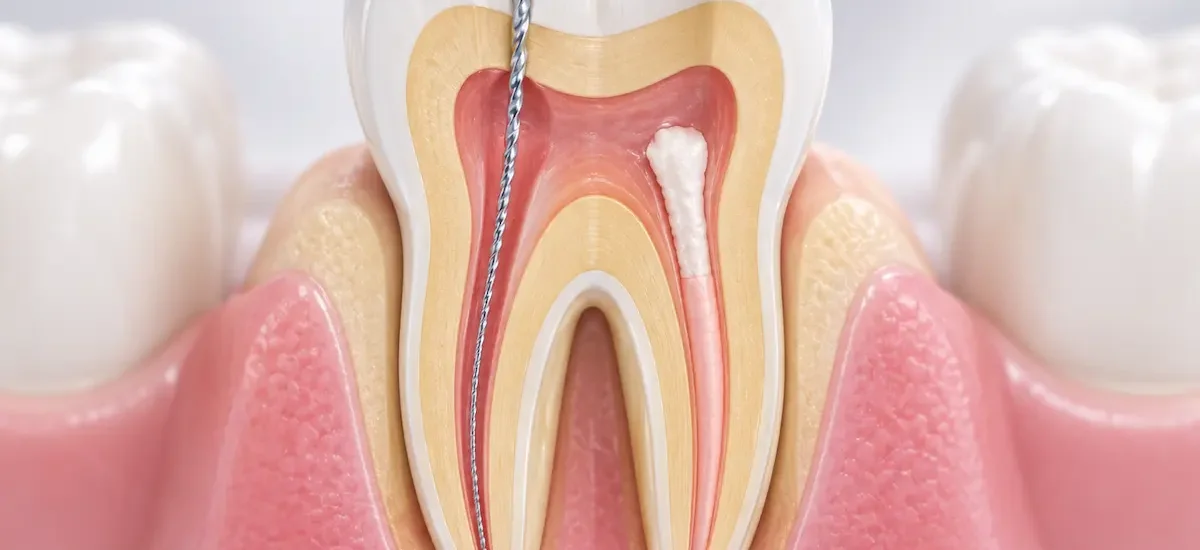
Tooth pain rarely goes away on its own. When the soft tissue inside a tooth (the pulp) becomes infected or inflamed, the damage usually gets worse over time, even if the pain comes and goes.
Root canal treatment (RCT) removes the infected pulp, cleans and seals the inside of the tooth, and saves your natural tooth from extraction. The earlier it’s done, the simpler the treatment and the better the outcome.
Here are seven signs that your tooth may need a root canal.
1. Persistent or Lingering Tooth Pain
Pain that doesn’t go away, or keeps returning, is one of the most common signs of pulp infection. It may feel like a deep, dull ache, or it may throb, especially at night or when you lie down.
Pain can also spread to your jaw, ear, or other teeth, making it hard to tell which tooth is causing it. A dental exam and X-ray can pinpoint the source.
2. Sensitivity to Hot or Cold That Lingers
Brief sensitivity to cold water or hot tea is common and often harmless. But if the discomfort lasts for more than a few seconds after the hot or cold is gone, it can indicate that the nerve inside the tooth is inflamed or damaged.
Sensitivity to heat in particular is often a sign of more advanced nerve involvement.
3. Pain When Chewing or Biting
If your tooth hurts when you bite down, chew, or touch it, the infection may have spread to the tissues around the root tip. This tenderness can also come from a crack in the tooth, which lets bacteria reach the pulp.
Many patients start chewing only on one side without realizing it. If you’ve noticed yourself doing this, get the tooth checked.
4. Swollen or Tender Gums Near the Tooth
Swelling in the gum around a specific tooth can be a sign of infection at the root. The area may feel tender, puffy, or warm. In some cases, swelling spreads to the face or jaw.
Facial swelling, fever, or difficulty swallowing needs urgent attention. Contact a dentist the same day.
5. A Pimple or Bump on the Gum
A small bump on the gum, sometimes called a gum boil or fistula, may release pus or a bad taste into your mouth. This is the body’s way of draining an abscess at the root of the tooth.
Even if it doesn’t hurt, the infection is still active. Draining doesn’t mean it has healed, and without treatment it can damage the surrounding bone.
6. Darkening or Discoloration of the Tooth
A tooth that turns grey, brown, or darker than the teeth around it may have a damaged or dying pulp. This often happens after an injury, such as a fall or a blow to the mouth, sometimes months or years later.
A discolored tooth isn’t always painful, which is why it’s easy to ignore. A dentist can test whether the nerve is still healthy.
7. Deep Decay, a Cracked Tooth, or a Loose Tooth
Some signs are only visible during an exam:
- Deep cavities that reach close to the nerve
- Cracked or chipped teeth that expose the inner layers
- Large, old fillings with decay underneath
- A tooth that feels slightly loose, which can occur when infection affects the supporting bone
This is why regular dental check-ups matter. Problems caught early can sometimes be managed with a filling instead of a root canal.
What If You Have No Symptoms?
Not every infected tooth hurts. Sometimes the nerve dies quietly, and the infection is only discovered on an X-ray during a routine visit. This is another reason to keep up with check-ups every six months.
Is Root Canal Treatment Painful?
This is the most common question we hear. With modern local anesthesia and rotary instruments, most patients say root canal treatment feels similar to getting a filling. The procedure is designed to relieve the pain caused by infection, not create it.
After treatment, mild soreness for a few days is normal and is usually managed with over-the-counter pain relief.
What Happens If You Delay Treatment?
An untreated tooth infection does not heal by itself. Delaying treatment can lead to:
- A spreading abscess and more severe pain
- Bone loss around the tooth
- Losing the tooth entirely, which means needing an implant or bridge later
- In rare cases, infection spreading to other parts of the body
Saving your natural tooth with a root canal is usually simpler and more affordable than replacing it.
Do You Need a Crown After a Root Canal?
Back teeth (molars and premolars) usually need a crown after RCT because the treated tooth becomes more brittle and has to handle heavy chewing forces. Front teeth sometimes need only a filling. Your dentist will recommend the right option. Learn more about our crowns and bridges.
Frequently Asked Questions
How do I know if I need a root canal or just a filling?
Only a dental exam and X-ray can confirm it. If decay has reached the pulp, or if you have lingering pain, swelling, or a gum bump, a root canal is usually needed.
How many visits does a root canal take?
Many root canals are completed in one or two visits, depending on the tooth and how severe the infection is.
Can antibiotics cure a tooth infection?
Antibiotics can reduce spreading infection, but they cannot clean out the infected pulp inside the tooth. The source of the infection still needs treatment.
Will the tooth last after a root canal?
With a proper restoration and good oral hygiene, a root-canal-treated tooth can last for many years, often a lifetime.
Root Canal Treatment in Kathmandu
At Bagmati Dental Clinic in Pepsicola, root canal treatment is carried out by our endodontist, Dr. Swati Rani Gupta, and dental surgeon Dr. Ankita Rani Gupta, using rotary techniques and strict sterilization protocols. Learn more about our root canal treatment.
Noticed any of these signs? Don’t wait for the pain to get worse.
📞 Call or WhatsApp: +977-9709139580
📍 Radha Krishna Complex, Pepsicola, Kathmandu
🗓️ Open Sunday to Friday. Walk-ins welcome.
This article is for general information and is not a substitute for a professional dental diagnosis.