
You brush twice a day, maybe even floss, so why does your dentist still recommend scaling? Because no matter how well you brush, some plaque hardens into tartar (calculus), and tartar can’t be removed with a toothbrush. Only professional cleaning can remove it.
So how often do you actually need scaling? For most people, every 6 months. But depending on your gum health and habits, you may need it more often, or occasionally less.
What Is Dental Scaling?
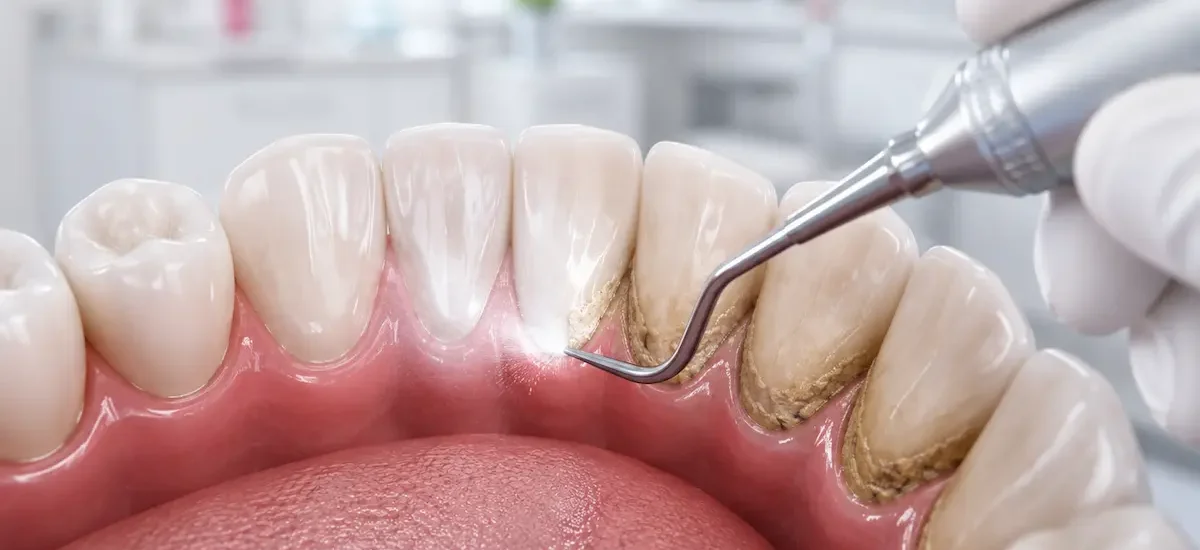
Scaling is a professional cleaning procedure that removes plaque and tartar from the surfaces of your teeth, including along and just below the gumline. It’s usually done with an ultrasonic scaler that vibrates tartar loose, followed by hand instruments and polishing.
It’s one of the simplest and most effective ways to prevent gum disease, bad breath, and tooth loss.
Why Tartar Builds Up
Plaque is a soft, sticky film of bacteria that forms on your teeth every day. If it isn’t removed thoroughly, minerals in saliva harden it into tartar, sometimes within just a day or two.
Tartar:
- Sticks firmly to teeth and can’t be brushed away
- Gives bacteria a rough surface to grow on
- Irritates the gums, causing redness, swelling, and bleeding
- Leads to bad breath and yellow or brown stains
- Can progress to gum disease (periodontitis), which damages the bone that supports your teeth
Tartar most commonly builds up behind the lower front teeth and on the outer surfaces of the upper back teeth, near the salivary glands.
The Recommended Scaling Schedule
Every 6 Months: Most People
For adults and children with generally healthy gums, scaling every six months, along with a routine check-up, is the standard recommendation. It removes tartar before it causes damage and lets your dentist catch cavities and other problems early.
Every 3 to 4 Months: Higher-Risk Patients
You may need more frequent scaling if you:
- Have or have had gum disease (bleeding gums, gum recession, loose teeth)
- Smoke or chew tobacco, gutkha, or paan
- Have diabetes, which increases the risk of gum infection
- Wear braces, which make cleaning harder
- Build up tartar quickly, even with good brushing
- Have dental implants, crowns, or bridges that need extra care
- Are pregnant, since hormonal changes can make gums more prone to inflammation
Every 12 Months: Low-Risk Patients
Some people with excellent oral hygiene, healthy gums, and very little tartar buildup may only need scaling once a year. Your dentist can tell you whether this applies to you after an examination.
The right interval is personal. Your dentist will recommend a schedule based on your gum health, tartar buildup, and risk factors.
Signs You’re Due for Scaling
- Bleeding gums when brushing or flossing
- Red, swollen, or tender gums
- Bad breath that doesn’t go away with brushing
- Yellow or brown hard deposits near the gumline
- Stains from tea, coffee, or tobacco
- Gums that look like they’re pulling away from the teeth
- A rough feeling on your teeth when you run your tongue over them
If you notice any of these, don’t wait for your next scheduled visit.
Common Scaling Myths
Myth: Scaling weakens or loosens teeth.
Fact: Scaling does not weaken teeth. If teeth feel slightly loose after scaling, it’s usually because heavy tartar was holding already-weakened teeth together. The real cause is gum disease, which scaling helps treat.
Myth: Scaling damages tooth enamel.
Fact: When done by a trained dentist, scaling removes tartar, not enamel. Modern ultrasonic scalers are designed to be safe for tooth surfaces.
Myth: Scaling creates gaps between teeth.
Fact: Scaling doesn’t create gaps. Tartar sometimes fills spaces caused by gum recession. When it’s removed, those existing gaps become visible.
Myth: If my teeth don’t hurt, I don’t need scaling.
Fact: Gum disease is often painless in its early stages. By the time it hurts, significant damage may have already occurred.
Myth: Scaling is only for looks.
Fact: Scaling makes teeth look cleaner, but its main purpose is to protect your gums and prevent tooth loss.
Is Scaling Painful?
Most people feel only mild discomfort, vibration, or a scraping sensation. If you have heavy tartar or inflamed gums, it may be a little more sensitive, and local anesthesia can be used if needed.
After scaling, it’s normal to have:
- Mild sensitivity to hot and cold for a few days
- Slight gum tenderness or light bleeding for a day or two
These usually settle quickly. A sensitivity toothpaste can help.
Scaling and Teeth Whitening
Scaling removes surface stains and tartar, which often makes teeth look noticeably brighter. But it doesn’t change the natural color of your teeth. If you’d like a whiter shade, professional whitening is usually done after scaling, when teeth are clean. Learn more about our scaling and teeth whitening services.
How to Keep Tartar Away Between Visits
- Brush twice a day for two minutes with fluoride toothpaste
- Clean between teeth daily with floss or interdental brushes
- Brush along the gumline at a gentle angle
- Limit sugary snacks and drinks
- Rinse with water after tea or coffee
- Quit smoking and tobacco chewing
- Replace your toothbrush every 3 months
Frequently Asked Questions
How often should I get my teeth scaled?
Most people should get scaling every 6 months. People with gum disease, smokers, diabetics, and braces wearers may need it every 3 to 4 months.
Is scaling safe during pregnancy?
Yes, routine scaling is generally considered safe during pregnancy, and the second trimester is often the most comfortable time. Let your dentist know you’re pregnant.
How long does scaling take?
A routine scaling and polishing session usually takes about 30 to 60 minutes. Heavy buildup or gum disease may need more than one visit.
Can children get scaling?
Yes. Children can develop tartar too, and a gentle cleaning is often part of their routine check-up.
Is deep cleaning the same as scaling?
Not exactly. Deep cleaning (scaling and root planing) cleans below the gumline and smooths root surfaces. It’s used to treat gum disease and may be done in sections.
Dental Scaling in Kathmandu
At Bagmati Dental Clinic in Pepsicola, scaling and polishing are part of our preventive care, performed with modern ultrasonic equipment and strict sterilization protocols. We’ll check your gum health, recommend the right cleaning schedule for you, and treat gum problems early. See all our dental services.
When was your last scaling? If it’s been more than 6 months, it’s time for a visit.
📞 Call or WhatsApp: +977-9709139580
📍 Radha Krishna Complex, Pepsicola, Kathmandu
🗓️ Open Sunday to Friday. Walk-ins welcome.
This article is for general information and is not a substitute for a professional dental diagnosis.